
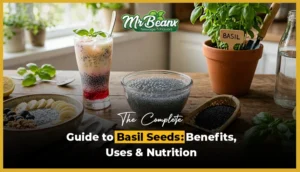
Basil has become a very strong natural superfood, which can be found in beverages, desserts, and even in regular meals. This guide identifies their advantages and nutrition, and you can use them to make a healthier routine.
The basil seeds are the product of the sweet basil plant. Soaked in water, they swell and form a gel-like coating that renders them perfect in beverages and desserts. They are also very healthy due to their high concentration of nutrients.
What Are Basil Seeds?
The basil plant is used to produce basil seeds that are used in cooking. They are similar to chia seeds, but they differ in aspects. Once soaked, they become soft, gelatinous, and help in digestion and hydration.
Traditionally, basil seeds were utilized in a variety of cultures as cooling and digestive agents. They are currently popular in both natural health practices and modern diets.
Due to their versatility, basil seeds are popular in drinks, smoothies, and desserts, and any new applications are being discovered around the world.
Basil Seeds Nutrition
Basil is well-liked due to its nutritional value, as it is a source of fibre, plant protein, and healthy fats that help maintain good health.
They are rich in dietary fibre that helps in digestion, the well-being of the gut and also helps regulate hunger, thereby keeping weight in check.
They also provide the necessities like calcium, magnesium and iron. Calcium helps to build bones, magnesium helps in muscle activity, and iron helps in the transportation of oxygen.
The presence of antioxidants in basil seeds helps to protect cells against free-radical destruction and contributes to other health effects.
Benefits Of Organic Basil Seeds
The purity and quality of the basil seeds is ensured by using organic seeds, as they are cultivated without the use of dangerous chemicals. Organic farming also secures the soil as well as the environment.
Digestive Support
One of the benefits is digestive support. The coating that results after soaking is mollifying to the digestive system which may alleviate acidity and stomach pains.
Hydration
Another advantage is hydration. Basil seeds are able to absorb and store water, thus maintaining a balance of fluids in hot weather.
Managing Weight
Their rich fibre content also helps in managing weight because it helps to feel full, thus consuming less and managing calorie levels.
Sugar Absorption
The fibre also lowers the rate of sugar absorption, which is used to stabilise the energy and sugar levels.
Basil Seeds for Health
Most people use basil seeds in their meals to enjoy several benefits to their health to facilitate various body processes.
First, they facilitate the health of the digestive system. The fibre is useful in the regulation of bowel movements as well as constipation, which enhances the absorption of nutrients.
Second, the basil seeds regulate appetite. The gel that was soaked grows in size and the gel becomes full thus snacking is minimized.
Third, they can help improve heart conditions. Plant compounds aid in reducing harmful cholesterol, which benefits cardiovascular health. They also make you hydrated, particularly during summer as they cool down the body and replace energy. The above advantages give basil seeds an opportunity to be an important inclusion in a healthy, balanced diet.
How to Use Basil Seeds?
It is important to use basil seeds as a taste and digestive aid. Firstly, the seeds must be soaked in water for 10-15 minutes. They absorb water during this period to form a gelatinous layer that makes them easier to consume. When they are softened, add them to beverages or food. They are effective in smoothies, juices, lemon water, milk-based beverages or herbal teas. They also mix well with yoghurt or even fruit bowls, and also work well in puddings and desserts.
Mixed with lemon, honey and cold water, a plain detox can be a good way to drink; this will aid in hydration and digestion. Awareness of the ways to use basil seeds will allow you to have a lot of creative ideas on how to make good use of it.
Uses of Basil Seeds in the Daily Diet
Basil seeds have a light taste that can be combined with other food items and can be added to many daily meals.
One of these is basil-seed lemonade. The seeds give it a nice chew and the drink is more refreshing during hot days.
The seeds of Basil can also be mixed in smoothies. Once wet, they add to the fiber and nutritional content, and make the drink more satisfying and invigorating.
Basil seeds are beneficial to desserts. They come up well in puddings, falooda, and fruit custards, and their jelly-like quality is beneficial to both the taste and the look.
When prepared in the form of breakfast bowls, soaked seeds in a tablespoon sprinkled over yoghurt or oatmeal do not alter the flavour but provide additional nutrients.
Due to their versatility, it is possible to easily add basil seeds to your everyday food.
How to buy and store Basil Seeds?
The best ones are high-quality seeds. Use fresh and clean seeds of trusted suppliers; organic ones are purer and safer. Store the seeds in an airtight container and keep it in a cool and dry place not in direct sunlight. With appropriate storage, the flavor and nutrients are preserved.
Basil seeds are easily ruined by moisture, hence they should always be closed by the lid. These are the basic steps that will help maintain the quality featured in this guide.
Conclusion
Even though small in size, basil seeds are a potent source of nutrition. Their minerals, antioxidants and fibre are healthy in general. This manual demonstrates how they facilitate a healthy lifestyle.
Their nutrient of organic basil seeds is impressive. It helps in digestion, hydration, and energy balance, with organic seeds providing an additional benefit in the form of wellness.
Get to know how to use basil seeds in beverages, desserts and meals- they are versatile and can therefore be incorporated in daily lives.
Basil seeds are one of the most useful natural foods with a great number of practical applications. Frequent consumption is beneficial to health and has numerous health advantages.